Description
Golden Teacher Mushroom
Introduction to Golden Teacher Mushroom
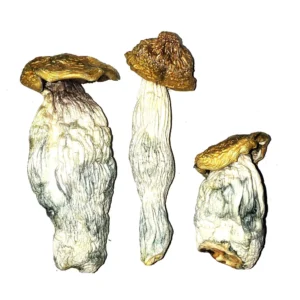
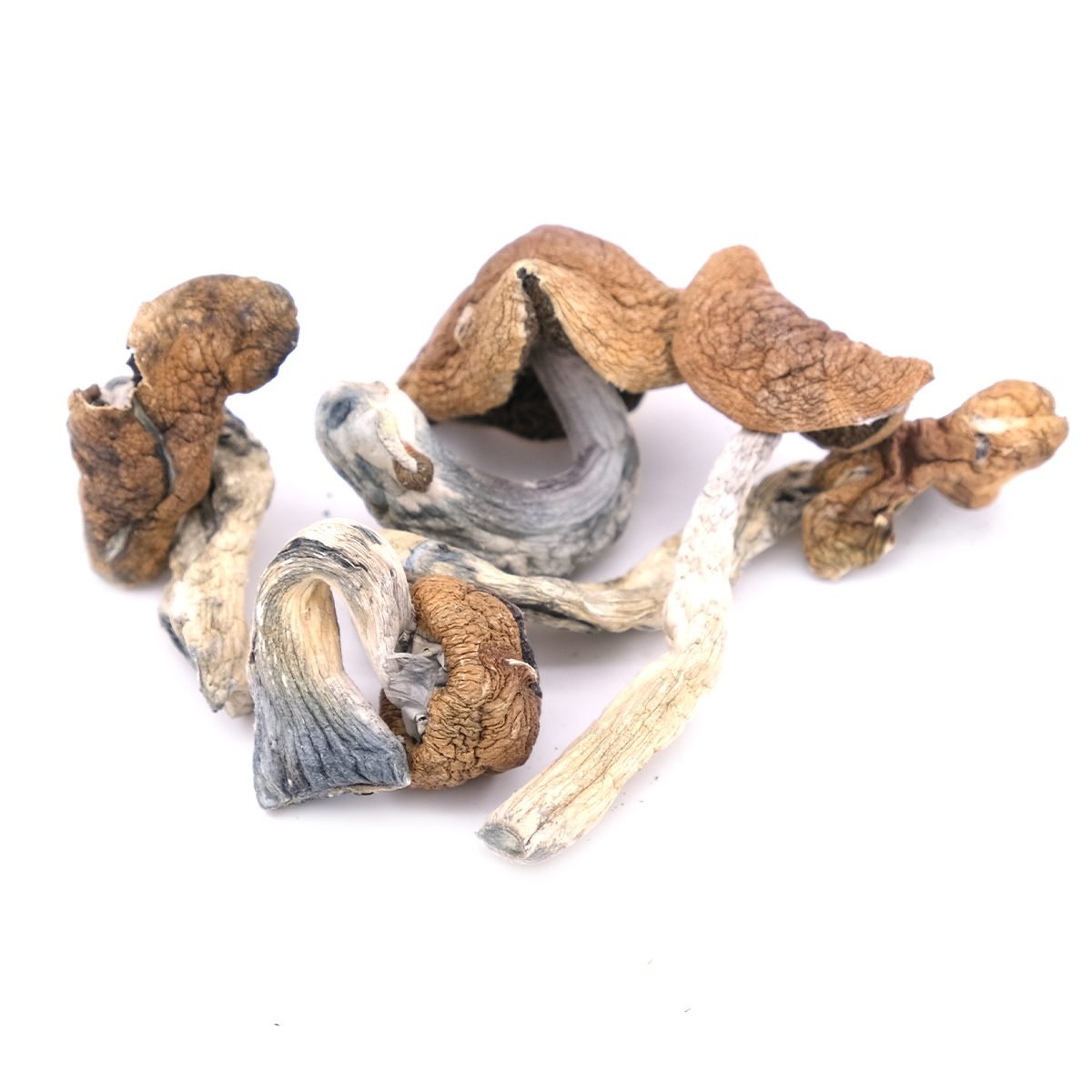
Golden Teacher Mushroom are one of the most well-known and widely-used psychedelic mushrooms in the world. Revered for their moderate potency, visual experiences, and deep philosophical insights, they’ve earned a legendary status among both new and experienced psychonauts.
Origin And History Of Golden Teacher Mushroom
BLUE BRUISING(Golden Teacher Mushroom)
Effects Of Golden Teacher Mushroom
Dosing Information Of Golden Teacher Mushroom
Growing Golden Teacher Mushroom
RISKS AND SAFETY
LEGAL STATUS
Microdosing Golden Teacher Mushroom
WHAT IS MICRODOSING?
Microdosing is the practice of taking sub-perceptual doses (usually 0.1–0.3g) of Golden Teachers every few days in order to improve:
-
Mood
-
Creativity
-
Focus
-
Energy levels
While the effects are subtle, users report that regular microdosing can enhance overall mental clarity and emotional balance.
Continuously, microdosing also refers to the practice of consuming very small (sub-perceptual) doses of psychedelic substances, such as Golden Teacher mushrooms (typically 0.1–0.3g). These doses are not intended to cause hallucinations or intense psychedelic experiences. Instead, the goal is to enhance daily life in subtle ways.
Users often report improvements in:
-
Mood
-
Creativity
-
Focus
-
Energy levels
While individual responses vary, many people find that microdosing boosts mental clarity and emotional resilience. Importantly, it’s done on a schedule, not daily, to avoid tolerance and overstimulation.
Microdosing Schedules & Protocols
Several popular microdosing protocols exist. Each follows a different rhythm and intent. Below are the most widely used schedules, explained clearly and with flow.
1. Fadiman Protocol (The Classic Approach)
Created by: Dr. James Fadiman
Schedule:
-
Day 1: Microdose
-
Day 2: No dose (afterglow day)
-
Day 3: No dose (baseline reset)
-
Repeat the cycle
This protocol follows a 3-day cycle, which includes a dose day followed by two rest days.
As a result, users can observe how the microdose affects them over time without the interference of daily intake.
Moreover, this method promotes self-awareness, journaling, and emotional integration.
It’s ideal for beginners who want a structured, balanced approach with time to reflect between doses.
 “Dose → Reflect → Integrate”
2. Stamets Stack (Cognitive Optimization Protocol)
Created by: Mycologist Paul Stamets
Schedule:
-
Dose for 4–5 days in a row
-
Then take 2–3 days off
What’s unique about the Stamets Stack is its combination of three key supplements:
-
Psilocybin (microdose)
-
Lion’s Mane mushroom (to promote neurogenesis)
-
Niacin (Vitamin B3) (to aid absorption and blood flow)
Therefore, the Stamets Stack aims to stimulate long-term brain growth and neural repair.
Compared to the Fadiman Protocol, this is more intensive and suited for those seeking enhanced cognition over time.
However, due to its intensity, it’s not always recommended for first-time microdosers.
3. Every Other Day Schedule (Moderate & Sustainable)
Schedule:
-
Day 1: Microdose
-
Day 2: Off
-
Repeat
This is a simple, 1-on / 1-off protocol.
As a result, it keeps the brain engaged with regular exposure while still preventing tolerance.
In contrast to daily dosing, this schedule gives the body space to rest and observe the lingering effects.
Furthermore, it’s easy to maintain and doesn’t require strict planning.
4. Intuitive or Weekly Microdosing (Flexible, Minimalist Approach)
Schedule:
-
Microdose only on specific days, such as:
-
High-stress days
-
Creative blocks
-
Emotional lows
-
Rather than following a fixed structure, this protocol encourages users to dose as needed.
For example, someone may microdose once per week before a big creative project.
However, this method relies heavily on self-awareness.
Therefore, it’s better suited for experienced users who understand how psilocybin affects them.
Summary: Choosing the Right Protocol
| Protocol | Dosing Pattern | Ideal For | Structure Level |
|---|---|---|---|
| Fadiman | Every 3 days | Beginners, integration-focused | Structured |
| Stamets Stack | 4–5 on, 2–3 off | Neurogenesis, long-term effects | Intensive |
| Every Other Day | 1-on / 1-off | Balanced mental performance | Moderate |
| Intuitive/Weekly | As needed | Experienced users, flexibility | Loose |
Trip Visuals Explained
When it comes to experiencing a Golden Teacher mushroom trip, visuals play a central role in shaping the psychedelic journey. First and foremost, it’s important to recognize that these visuals vary widely based on dose, mindset, and setting. Moreover, the visuals often evolve as the trip progresses, transitioning from subtle enhancements to profound, intricate hallucinations.
Beginning Phase: Subtle Visual Enhancements
Initially, users often notice slight alterations in color perception and light sensitivity. For example, colors might seem richer or more saturated, while light sources may glow softly. In addition, patterns such as breathing walls or slight distortions in edges might begin to manifest. Consequently, even mundane surfaces take on a surreal quality.
Furthermore, textures appear more detailed; wood grain, fabric weave, and natural elements like leaves seem to come alive. As a result, observers may find themselves deeply captivated by these normally overlooked details. Besides, the environment feels more immersive, making one more connected to their surroundings.
Mid-Trip: Pattern Recognition and Morphing
As the trip deepens, visuals intensify. For instance, geometric patterns emerge and pulse rhythmically across surfaces. Likewise, fractal designs become more apparent, especially when eyes are closed. Moreover, these patterns often seem three-dimensional and dynamic rather than flat and static.
In addition, shapes begin to morph fluidly. Therefore, walls might ripple like water, and objects subtly shift form, sometimes blending into one another. At the same time, symmetry becomes more noticeable; for example, fractal spirals or mandala-like visuals dominate the field of vision. Moreover, this stage is often accompanied by enhanced visual acuity, paradoxically making some details sharper even amid distortion.
B+ vs Golden Teacher Mushrooms — Key Differences
B+ mushrooms are known for fast growth, high yields, and uplifting effects, while Golden Teacher offers slower, more forgiving cultivation and introspective, calming experiences.
Peak Visuals: Full Immersion and Synesthesia
When the trip reaches its peak, visuals can become overwhelmingly vivid and immersive. Specifically, the user may experience full-on hallucinations where solid objects breathe, melt, or even animate. Furthermore, light sources may radiate vibrant halos or aura-like glows. In addition, colors might shift continuously, cycling through the entire spectrum in mesmerizing waves.
Moreover, some report encountering visionary imagery, such as fractal landscapes or intricate tapestries that appear to extend infinitely. Not only that, but synesthesia—the blending of senses—often enhances visuals; sounds may evoke colors, and colors may “feel” textured. Consequently, the boundary between internal imagination and external reality blurs significantly.
Besides, visual distortions can include trails or tracers following moving objects, sometimes making movements appear slowed or exaggerated. At the same time, eyes-closed visuals are often as vivid as open-eye experiences, filled with kaleidoscopic, colorful patterns.
In some cases, also report:
-
Visual echoes: where images linger briefly as if trailing behind moving objects.
-
Depth distortions: making flat surfaces appear three-dimensional or vice versa.
-
Micro-patterns: tiny geometric shapes filling the visual field, especially on plain backgrounds.
-
Color inversion or enhancement: colors flipping to their opposites or becoming hyper-saturated.
Moreover, environmental factors like lighting and textures dramatically influence the visuals. For instance, dappled sunlight through leaves can create intricate moving patterns that fascinate the eyes. Similarly, watching flames or water often produces particularly dynamic and fluid visual effects.
However, it’s essential to remember that visuals differ widely between individuals. For example, one person’s experience may emphasize geometric fractals, whereas another’s focuses more on organic, flowing shapes. Furthermore, mindset and emotional state heavily influence visual intensity and interpretation. Therefore, setting intentions and a safe environment are key to navigating these visuals positively.
In conclusion, Golden Teacher mushroom visuals range from subtle enhancements to fully immersive, multi-sensory hallucinations. Moreover, through gradual phases—from gentle color shifts and texture enhancements to dynamic fractals and synesthetic experiences—these visuals define much of the magic and mystery of the psychedelic journey.
Why They Are Great For First-Timers
Certainly! Here’s a final summary explaining why Golden Teacher mushrooms are great for first-timers. When considering why Golden Teacher mushrooms are an excellent choice for first-time users, there are several compelling reasons that make them stand out. First and foremost, Golden Teachers are renowned for their gentle and approachable effects, which makes them ideal for beginners who want to explore psychedelics without overwhelming intensity. Moreover, their well-balanced potency ensures that the experience is profound yet manageable, allowing users to comfortably navigate the trip.
In addition to this, Golden Teachers have a longstanding reputation for inducing spiritual insights and introspection, which is beneficial for those seeking personal growth or emotional healing. Furthermore, the strain is often praised for its clear-headedness and mental clarity, which contrasts with other more chaotic or disorienting psychedelic experiences. As a result, first-timers are more likely to feel safe and supported throughout their journey.
Frequently Asked Questions
Besides,
Golden Teacher mushrooms tend to produce visually rich yet not overpowering hallucinations, thereby providing an engaging but not frightening visual experience. Consequently, this helps reduce anxiety and fear that can sometimes accompany a first psychedelic trip. Additionally, the strain’s moderate duration—typically around 4 to 6 hours—offers enough time to explore the effects without being excessively long, which can be reassuring for new users.
Not only that, Golden Teachers are widely available and well-documented, meaning that beginners can easily access reliable information and community support. Therefore, this accessibility reduces the uncertainty and risk often associated with trying psychedelics for the first time. In fact, many users and guides recommend Golden Teachers specifically because of these qualities, which further reinforces their suitability for novices.
In summary, due to their balanced potency, supportive mental clarity, manageable duration, and reputation for spiritual insights, Golden Teacher mushrooms represent one of the safest and most rewarding options for anyone embarking on their first psychedelic experience. Hence, trying Golden Teachers first can pave the way for positive, transformative journeys while minimizing potential discomfort or confusion.